The Five Operating Dimensions of an AI-Ready Business
The operating layer that sits between AI strategy and AI working — five dimensions that decide whether AI brings value home or sits in the corner of the strategy deck.
It's not your AI strategy.
It's not your tooling.
It's not your platform.
What separates the leadership teams making AI work from the ones still figuring it out is what they did with the five operating dimensions of their business.
You don't buy a harvest. You build the conditions for one.
AI is no different. Five operating dimensions decide whether you will reap the reward.
The foundations get most of the attention right now. Culture, structure, decisions, capability. And they should. Without them, AI conversations rarely get past the first slide. But the foundations only get you ready. They don't tell you how the business actually operates once AI is in the room.
For the last twelve months, the AI Change Framework I've been developing with leadership teams has put me in rooms with companies who've done the foundational work and then hit the next problem. Their team is willing. The board has approved a budget. The strategy deck looks good. And nothing seems to move.
It's not the tools. It's not the strategy. It's that the five operating dimensions of their business haven't been designed.
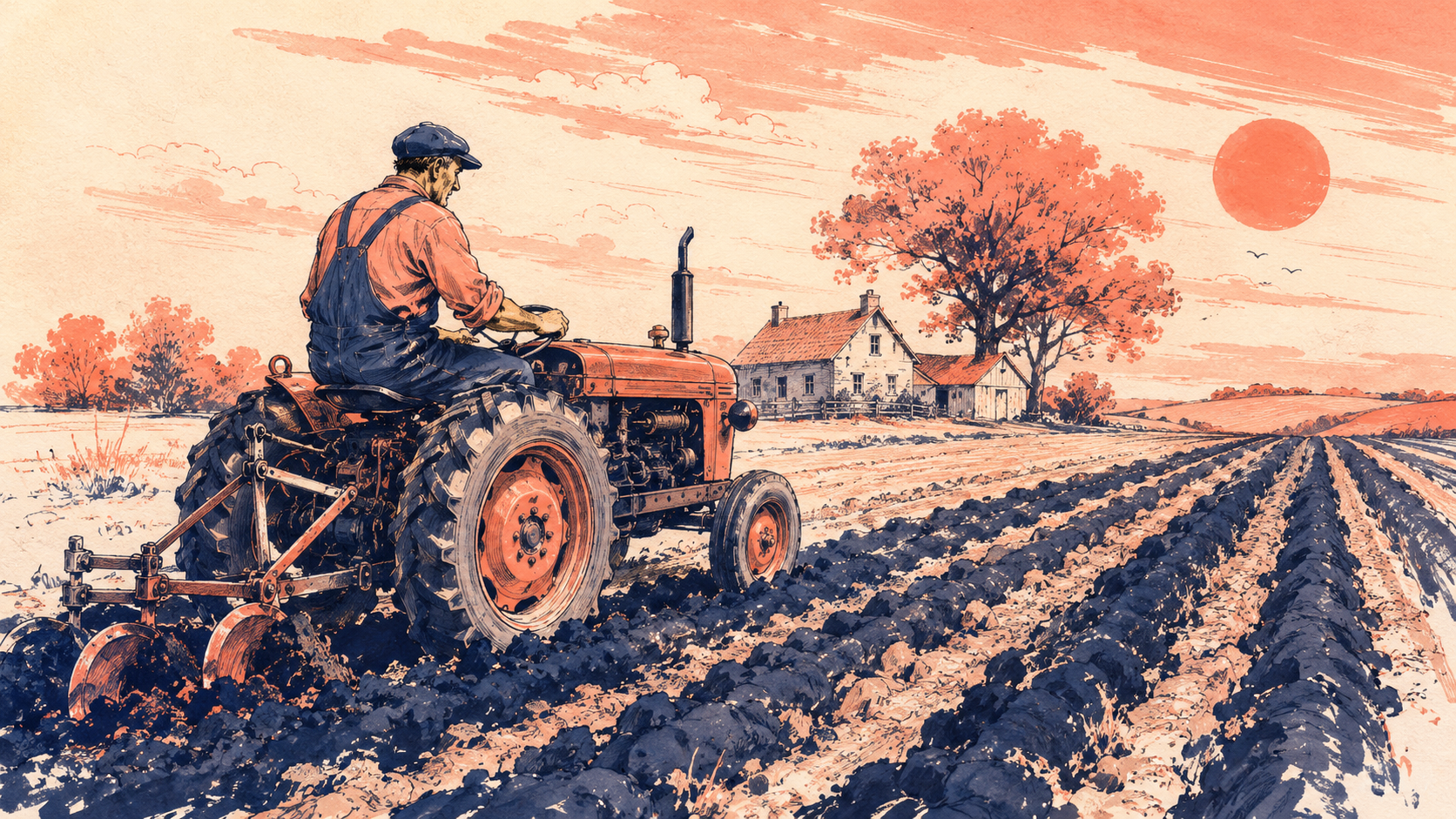
A working farm at harvest
The clearest way I've found to describe these dimensions is to picture a working farm at the end of summer.
A farm at harvest is a complete operating system. Not the brand, not the brochure. The actual working day. The actual moving parts. The actual decisions being made under pressure. Five things have to be in good shape for the farm to bring the crop in.
And the same five things have to be in good shape for AI to bring value home in your business.
Dimension 1. What the farm knows
The first dimension is what the farm knows. Soil tests. Weather records. Which paddock flooded last winter. Which seed worked in the dry spell two years ago. Where the fences need fixing before the cattle move through.
In an AI-ready business this is Knowledge Architecture. Not a SharePoint full of documents nobody opens. A living record of how the business actually works, captured by AI as the work happens. Meeting decisions, expert know-how, the reasoning behind the call. Structured so AI can find the right answer the second someone asks for it.
When this dimension is in good shape, AI agents reference your business. When it isn't, the AI sounds impressive and helps nobody.
Dimension 2. How the paddocks are laid out
The second is how the paddocks are laid out. Not by what's been planted there for thirty years, but by what each paddock is being asked to produce this season. Which corner gets the wheat. Which one's set aside for cattle. Which one is rotated, rested, replanted.
This is Value Centre Design. Configuring people and AI around the outcome you're trying to produce, not the department box on the org chart. A Value Centre has a named human accountable for the value being created and a deliberate mix of human capability and AI capability assigned to deliver it.
When this dimension is in good shape, leaders talk about the outcome they own. When it isn't, they talk about the team they manage.
Dimension 3. The calls the farmer makes
The third is when to harvest. When to spray. When to drench. When to wait. The farmer doesn't make every call the same way. Some are theirs and theirs alone. Some they delegate. Some run automatically because the rule was set last week.
This is Decision Architecture. Three tiers of decisions: the ones a named human has to make, the ones humans make with AI doing the legwork, and the ones AI runs inside an agreed boundary. Every significant decision in your business should sit in one of those three tiers. And the people doing the work should know which.
When this dimension is in good shape, decisions get made at the speed the work demands. When it isn't, everything escalates.
Dimension 4. Who drives the header
The fourth is who drives the header. The farmer used to spend twenty hours behind the wheel and now spends four. The header drives itself across most of the paddock. The farmer takes over at the gates, the corners, and the moments where the GPS doesn't know what the soil is doing.
This is Intelligence Allocation. Deciding, deliberately, which work AI runs and which work humans do. Not by job description. By the type of intelligence the work needs. AI for the repeatable. Humans for the judgement. AI for the synthesis. Humans for the relationships and the high-stakes calls.
When this dimension is in good shape, the team feels lighter and the work feels sharper. When it isn't, AI gets bolted onto existing roles and the team feels stretched thinner than before.
Dimension 5. What the farmhands are learning
The fifth is what the farmhands are learning. When the header started driving itself, the farmhand's job changed. Less time at the wheel. More time reading the moisture meter, calling the agronomist, walking the back paddock the machine can't see. Same person. Different work. Better work, if the migration is supported.
This is Human Capital Evolution. Every person in the business needs to know what their irreplaceable contribution is becoming as AI absorbs more of the execution. They need a track to grow into and the time and mentoring to actually do it. Without that, your best people don't disappear in a single moment. They disappear quietly, over months, because nobody told them what they were becoming.
When this dimension is in good shape, your best people get sharper. When it isn't, your best people get quieter.
It's a system, not a list
None of these five operate alone. The knowledge feeds the decisions. The decisions shape the Value Centres. The Value Centres allocate the intelligence. The intelligence allocation changes the human migration. The human migration deepens the knowledge.
It's a system. Not a list. You don't get to pick three.
This is the operating layer that strategy decks tend to skip. The foundations get you ready for the conversation. The five dimensions are the conversation. Without them, the AI tools land in a paddock nobody designed and produce a harvest nobody planned for.
What to do with this
Send this to the COO or transformation lead on your team who's been told "build the AI strategy" and isn't sure where to start. These five dimensions are where the strategy actually lives. Walk them through the farm. Ask which of the five they'd describe as in good shape today. The honest answer is usually the work to do next.
Related Articles
You Can't Put AI Into a Business That Hasn't Built the Right Foundations
Everyone's racing to put AI into their business. Almost no one is preparing their business for the conversations that come next. That gap is where good companies are going to trip over.
Cognitive Load Is an Operating Model Problem: Designing AI-Ready Organisations Around How Brains Actually Work
Leaders are being asked to rewire themselves while sitting inside organisations explicitly designed against how their brains work. A neuroscience-led playbook for redesigning operating models for the age of AI — built around the Four Cognitive Failure Modes and Value-Centred Design.
Get the Operator Brief
A short fortnightly email for people who run things — one idea, one practical tool, one lesson from the field. No fluff.
Explore More Insights
Discover more lessons from the trenches of agile transformation.
View All Articles